
In the spotlight

"We moved from tech to infrastructure. Maybe we weren't really aware of what that means, but it happened. And then that letter came [from the Dutch Government], and I said: okay. Things are different now."
Different is an understatement. Last Mile Solutions processes six million charging sessions a month. Pull the switch, and a significant part of the Benelux's mobility infrastructure goes dark. That's beyond a tech startup story. EV charging infrastructure has become a backbone of a smart and sustainable mobility system.
But the more interesting question isn't where Last Mile Solutions has ended up. It's how they got there, and what that trajectory says about the way the Netherlands approaches problems that much of the world is beginning to confront.
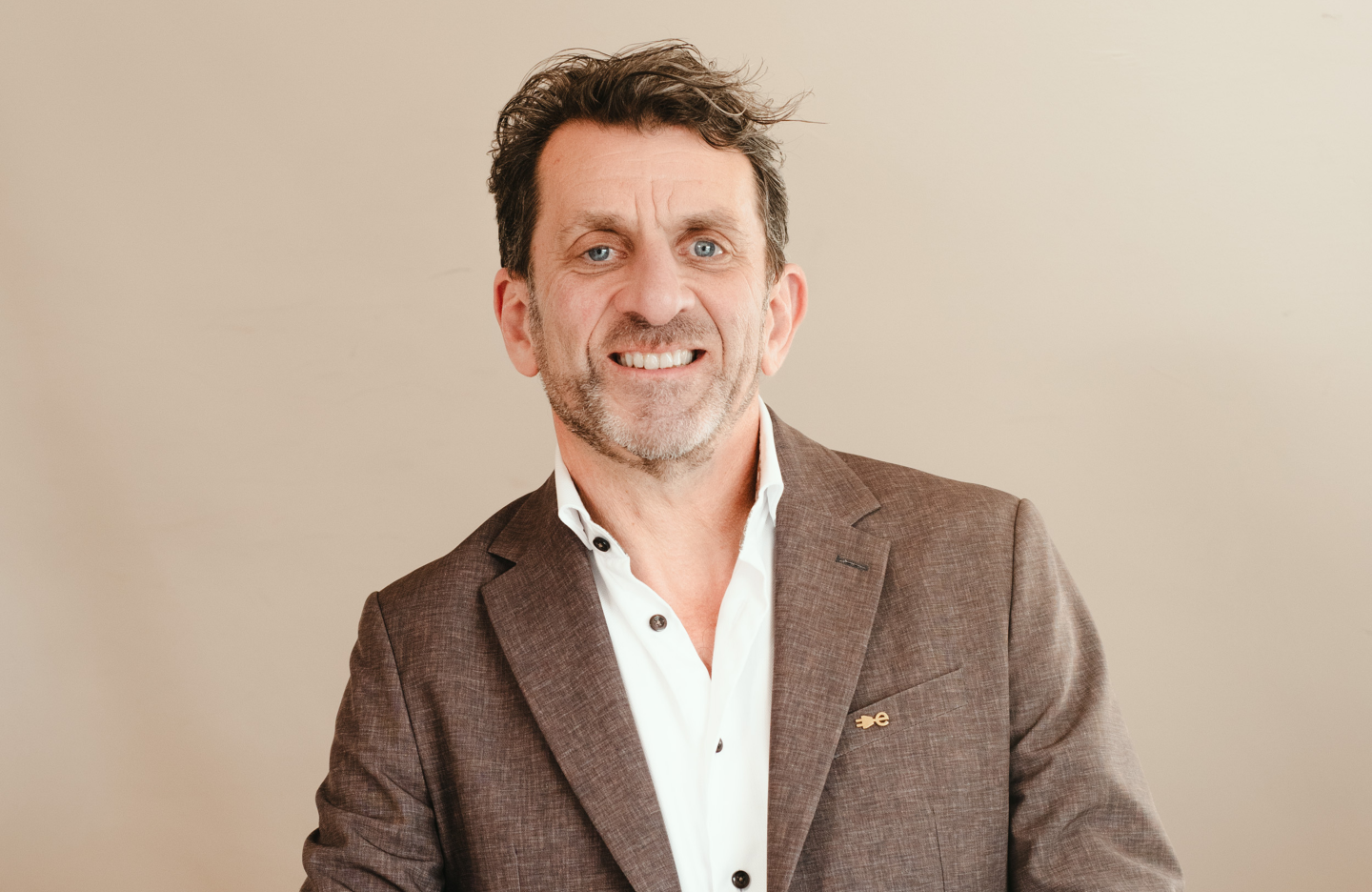
Eric van Voorden, co-founder and CEO of Last Mile Solutions. Photo credit: Last Mile Solutions.
Last Mile Solutions was founded in 2005. In the early days, there was almost no EV charging infrastructure to work with. No standards. Barely any vehicles. The first Nissan Leaf somewhere on the horizon. Eric recalls former Dutch prime minister's Ruud Lubbers Volkswagen Golf that had been converted to electric.
"We had to define a new world," Eric says. "We had to invent everything."
What followed went beyond building a product. A small group of early movers, including Last Mile Solutions, EVBox, Allego, New Motion, Greenflux and others, started cooperating because it was the only way forward. Standards had to be agreed. Data exchange protocols had to be defined. And so OCPP, the communication standard between charging stations and the platform, was born through working groups.
Today, it's used worldwide. Chinese vendors comply with it. American operators build to it. "It's a nice example," Eric says, "of how you can export knowledge based on cooperation."
That's a very Dutch thing to say, and it's not accidental. The Netherlands doesn't have the dominant car industry of Germany or the energy giants of France. What we do have is a trading culture baked in over centuries: a pragmatic understanding that when you don't have the resources to dominate, you build systems that benefit from everyone's participation. Eric puts it plainly: "As Dutch, when you look at our history, we are all dependent on trading and services. That's something in our roots."
Today the Netherlands has more charge points per capita than any other country in Europe. Whilst this may sound like a boast, it's not. It's simply context for what comes next.
"If you see where we are today in the Netherlands, because of the rapid rollout of electric mobility, we are now facing the problems that come with it. Like, for example, grid congestion, demand and delivery of renewable energy, smart charging and price transparancy. We've had these issues for years."
Running into the wall first is only useful if you share what you found there. Eric is characteristically direct about that instinct too. Eric is board member of E-mobility Europe; further Last Mile Solutions sits inside 26 working groups, including the Open Charge Alliance, the EV Roaming Foundation, and ChargeUp Europe, because standards and regulations only work when everyone builds to the same ones and are adopted widely. "Inventing the wheel again," Eric says simply, "is not effective."
"We have been taking a collaborative approach to solving these problems. We involve the utilities, the CPOs, the charging infrastructure, the grid infrastructure, and also the government. Today the solutions are becoming mature. We see that other countries are behind us in terms of the EV rollout. But of course, they will have the same technical challenges."
There's a broader shift happening here. The EV market is moving from pioneers to mass consumers. The early adopter who kept an extension cable in the boot and treated a failed charge as an adventure is being replaced by someone who just wants it to work. That demands a different kind of company.
But infrastructure identity doesn't mean the innovation stops. If anything, the opposite. The more complex the ecosystem becomes, the more essential the platform underneath it gets. Solar storage. Fleet electrification. Energy trading across stakeholders. All of it runs on rails that someone, somewhere, has to keep maintained.
And that platform was never built alone. The standards that now govern how charging stations communicate worldwide emerged from working groups. The roaming agreements that let an EV driver cross a border and charge without friction exist because competitors sat in the same room and agreed they were better off with rules than without them.
That is twenty years of a very Dutch instinct, the same instinct that built the ports, the water infrastructure, and the trading networks. applied to a new kind of grid.
Over the next twenty years, the rest of Europe will face the same challenges, and Last Mile Solutions has made clear it would rather help build that world than simply watch it arrive.
That might be the most useful thing the Dutch EV ecosystem has to offer its neighbours. Beyond the technology, the standards, and the regulatory frameworks. It's the habit of building together.